Il progetto
«Come funziona Cibel?»
Quando le pietre parlano. Storie verificate. In situ.
Quando le pietre parlano. Storie verificate. In situ.
«Tremila anni di Mediterraneo in una sola conversazione. Sono qui — chiedimi tutto quello che vuoi sapere su Cibel.»
«Come funziona Cibel?»
«Perché ti chiami Cibel?»
«Quali voci parlano per te?»
«Posso ascoltarne una adesso?»
«Cosa ti rende diversa?»
«Come si diventa partner?»
◆ Le risposte di Cibel sono ancorate al suo archivio verificato. Quando non sa, lo dice.
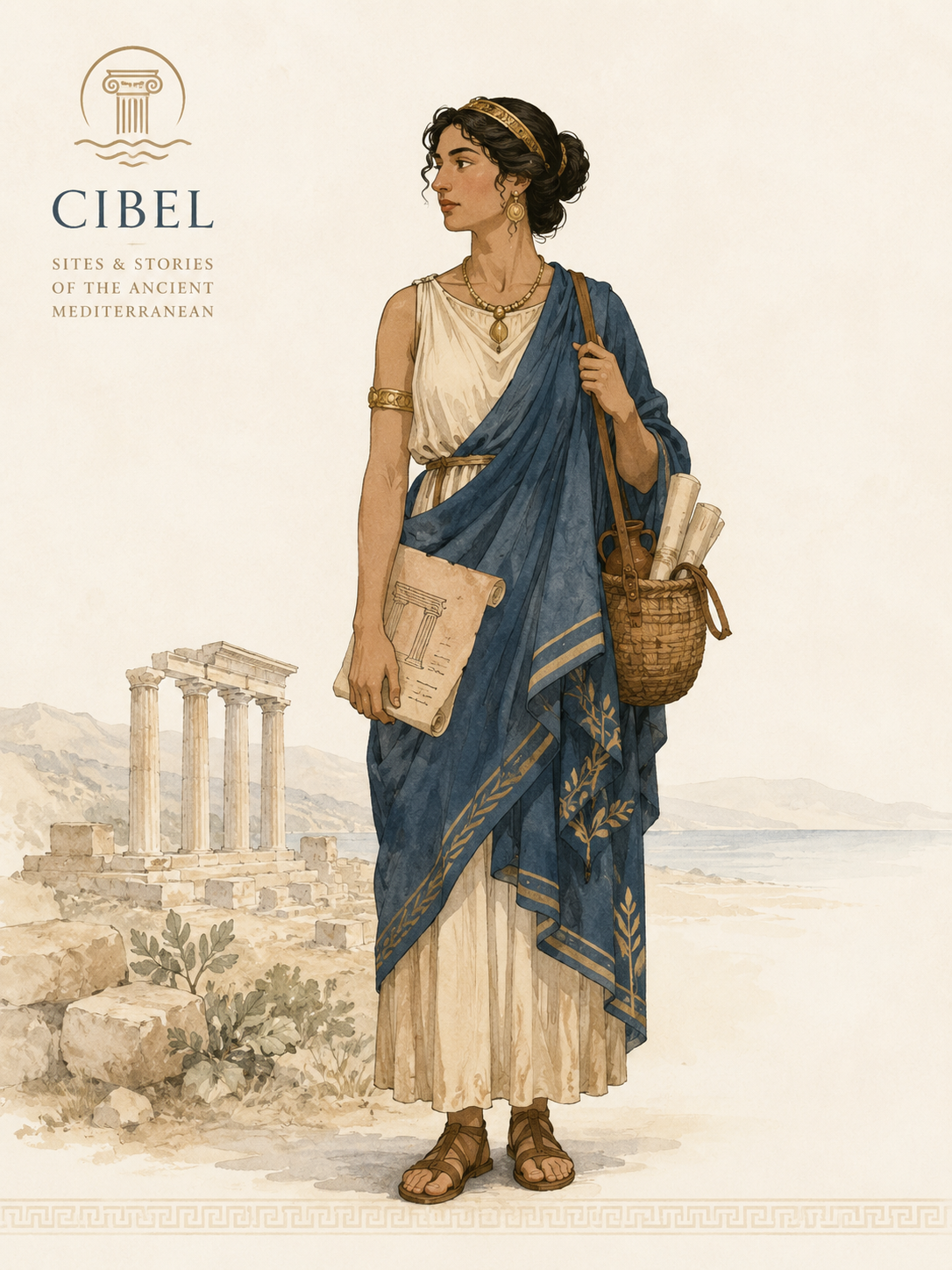
Vibia Galla è una voce narrativa ispirata alla gens Vibia documentata ad Aquinum: non un personaggio storicamente attestato, ma una sacerdotessa del culto imperiale che racconta il suo sito ancorandosi alle fonti verificate. Parla cinque lingue, conosce ogni pietra di Aquinum e ti aspetta.
I siti archeologici all'aperto sono deserti di mediazione. Non un pannello, non una guida, non un'audioguida: solo pietre, in attesa.
Cibel restituisce a quelle pietre una voce — non per invenzione, ma attraverso un archivio. Ogni risposta è ancorata a fonti istituzionali. Quando la voce non sa, lo dice.
Un itinerario mediterraneo, costruito un sito alla volta.
Aquinum
sacerdos divae Augustae
A priestess of the imperial cult at the Central Baths. She speaks five languages. She knows only what the inscriptions say.
Eumachia
«priestess of Venus, patron of the Pompeian Forum»
We are building the narrative voice of Pompeii with our institutional partners. An entire city telling its own story through frescoes, shopfronts and electoral graffiti.
Priestess of Hera Argiva
«voice of the great mother of the Doric temples»
A voice for the temples of Hera and Poseidonia. In development with the Parco Archeologico di Paestum e Velia, anchored in the memory of the Achaean colony.
Scribonia Attice
«midwife of the port of Rome, voice of births»
Merchants, sailors, booksellers and Eastern cults in a city by the sea. A Mediterranean voice for the harbour that fed the Urbs.
Vibia Sabina
«the Augusta who lived inside Hadrian's dream»
A voice for Hadrian's villa-world: the Canopus, the Pecile, the Maritime Theatre. The emperor who built the geography of his own empire in a single place.
Priestess of Demeter Malophoros
«voice of Demeter, lady of the pomegranates»
A voice for the Greek colony facing the Strait of Sicily. Temples toppled and raised again, where the wind still pronounces the names of the gods.
Persephone (Kore)
«the maiden carried off, queen of the underworld and of the seasons»
Concordia, Hera Lacinia, Olympian Zeus. A voice for Akragas, the city Pindar called the most beautiful of those inhabited by mortals.
The Sleeping Goddess
«voice of the most ancient stones, before writing»
A voice for the megalithic sanctuaries facing the Mediterranean. Stones aligned to the sun even before history was written.
The Sleeping Lady
«the sleeper of limestone, dream of an underground sanctuary»
A voice for the only prehistoric hypogeic temple in the world. Hand-carved chambers, red ochre on the ceilings, a Sleeping Lady.
Aristonice
«the Pythia who spoke of wooden walls and saved Athens»
A voice for the sanctuary of Apollo, where the Pythia answered kings. The omphalós, the treasury of the Athenians, and a maxim carved in stone: know thyself.
Kallipateira
«the only woman who entered the stadium of men»
A voice for the Altis of Zeus and the stadium where every four years the Mediterranean laid down its arms. Pheidias's workshop included.
Ariadne
«the thread in the labyrinth, the princess of Knossos»
A voice for the Minoan palace, the throne rooms, the dolphin frescoes. Where the myth of Minos ends and archaeology begins.
Clytemnestra
«the queen who waited, the queen who killed»
A voice for the Cyclopean citadel sung by Homer. Tholos tombs, gold masks, and the noise of a war that became poetry.
Priestess of Artemis of Ephesus
«voice of Artemis, lady of the bees and of the burned temple»
A voice for the Ionian metropolis where Artemis, Paul of Tarsus and the merchants of the Mediterranean lived side by side. The Celsus façade still teaches us how to read.
Meter Basileia
«the altar removed, the voice remaining — the Mother comes home»
A voice for the Hellenistic acropolis, the library that rivalled Alexandria, the altar of Zeus today in Berlin. Pergamon speaks even from afar.
◆
I siti all'aperto non hanno voce. I pannelli sbiadiscono, le guide costano, le audioguide sono fredde. Cibel è la voce che mancava.
◆
Ogni risposta è ancorata a un archivio istituzionale. Quando la voce non sa, lo dice. È la promessa anti-allucinazione di Cibel.
◆
Le voci di Cibel vivono dove vivono le pietre. Nessun museo surrogato. Nessun reperto ricollocato. Solo il luogo — e la sua voce.
Lavoriamo con istituzioni che vogliono dare voce ai propri luoghi senza tradirne la storia. Una piccola selezione di partner, con pieno supporto curatoriale.
La Britannia romana è un'unica storia continua — e quasi nulla di essa ha voce. Questi sono i luoghi dove arriverà la voce di Cibel.
Vallo di Adriano
«La voce più umana della Britannia romana.»
Le tavolette di Vindolanda sono fra i più antichi documenti manoscritti della Britannia — lettere, liste, un invito di compleanno — ancora oggi rinvenute ogni stagione di scavo.
Aquae Sulis
«La fonte sacra che non ha mai smesso di sgorgare.»
Un complesso templare e termale romano attorno a una sorgente calda naturale, dedicato a Sulis Minerva.
Corinium
«La seconda città della Britannia romana.»
Un museo costruito attorno a una città romana e ai suoi straordinari mosaici.
Deva
«La fortezza al confine dell'impero.»
Il più grande anfiteatro romano della Britannia; il Grosvenor Museum custodisce una delle più ricche collezioni di stele funerarie romane del paese.
Eboracum
«Dove fu fatto un imperatore.»
Fortezza legionaria e capitale del nord romano, dove Costantino fu proclamato imperatore nel 306 d.C.
Roman Palace
«Il più grande palazzo romano a nord delle Alpi.»
Un palazzo, un sito, una storia.
◆ Questi sono i siti candidati per il programma Cibel UK. Ognuno è custode di un luogo specifico — l'unico tipo di voce che Cibel dà.